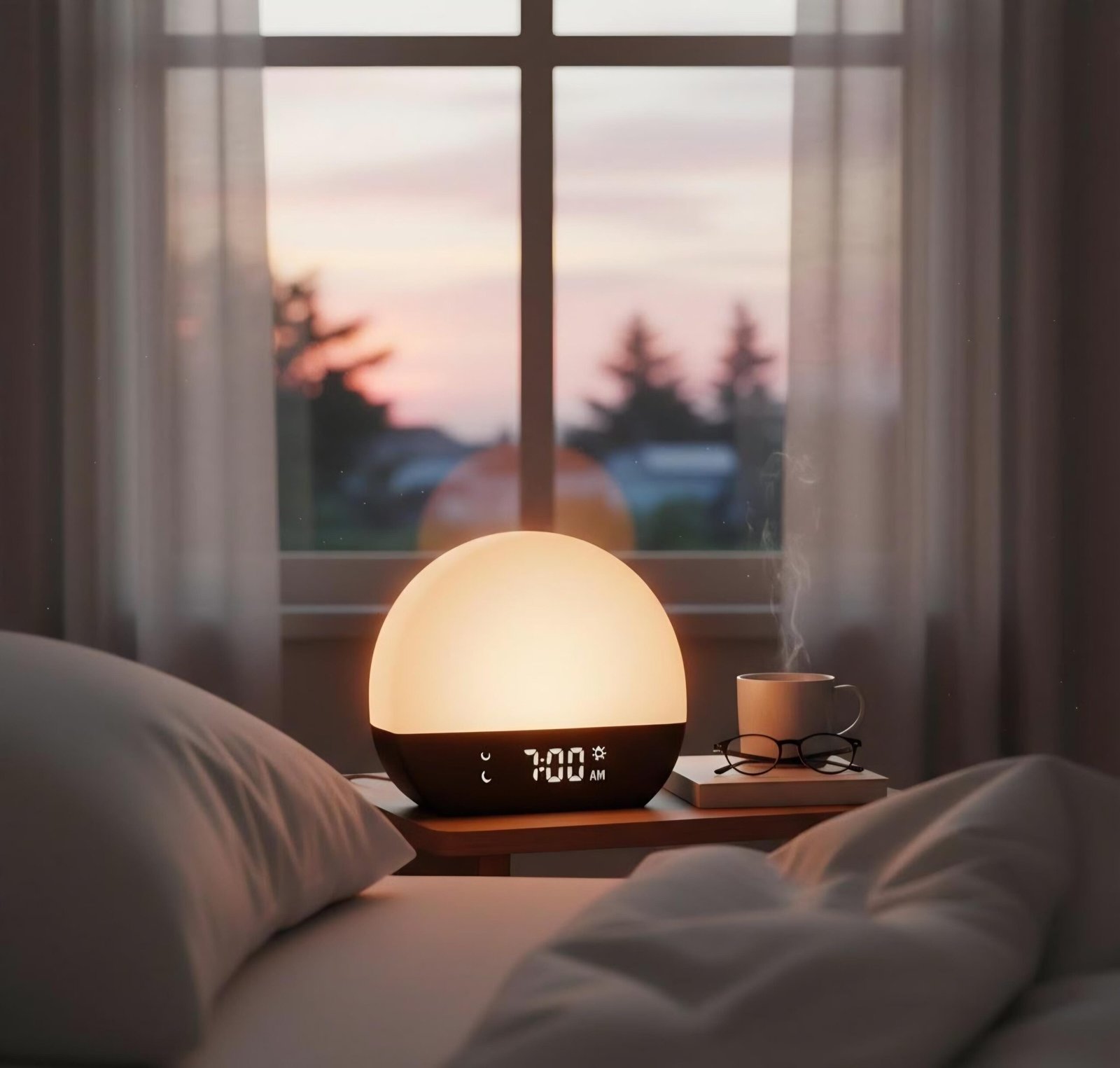
Want gentler mornings and a calmer bedtime routine? A good sunrise alarm clock gradually brightens like a real dawn, helping your body wake naturally (and wind down with sunset mode at night). Below you’ll find vetted picks—classic Philips Wake-up Light, app-guided Hatch Restore, and value standouts—chosen for light quality, useful features, and long-term value.
We prioritized widely available Amazon models with reliable hardware, intuitive controls, and strong buyer feedback. Prices change fast—re-check the product page before buying. Mid-October promos often bring meaningful markdowns.
Below are five strong picks with quick picks, a head-to-head table, detailed notes, and a buyer’s guide so you can wake up brighter and sleep more soundly.
Quick Picks
Top Pick
Philips SmartSleep Wake-Up Light (HF3520/60)
Proven sunrise/sunset simulation with 20 brightness levels and natural sounds—great balance of light quality, simplicity, and price.
Runner-Up:
Lumie Bodyclock Shine 300
Premium light quality with adjustable 15–90-minute sunrise and medical-grade heritage; excellent for light-sensitive sleepers.
Best Value:
JALL Sunrise Alarm Clock
Affordable favorite with FM radio, dual alarms, and solid sunrise simulation—easy choice for first-time buyers.
Most Features:
Hatch Restore 3
App-guided routines, white noise library, phone-free controls, and polished design—great for building consistent sleep habits.
Budget + White Noise:
Reacher Sunrise Alarm w/ Sound Machine
Built-in 26 sounds, adjustable 5–60-minute sunrise, and dimmable clock—nice all-in-one on a budget.
Head-to-Head Comparison
| Product | Light/Features | Standout | Pros | Cons | Deal Status* | Best For |
|---|---|---|---|---|---|---|
| Philips SmartSleep HF3520/60 | Sunrise/sunset, 20 levels, 5 natural sounds, FM | Proven, simple controls | Reliable light quality; easy setup | No app/sleep library | Often discounted | Most users, classic bedside |
| Lumie Bodyclock Shine 300 | 15–90 min sunrise; radio; warm LEDs | Refined, adjustable dawn curve | Excellent dawn/sunset feel; premium build | Higher price; no app | Periodic promos | Light-sensitive sleepers |
| JALL Sunrise Alarm Clock | Sunrise 10–60 min; FM; dual alarms | Low price, lots of basics | Great value; simple controls | Plastic feel; fewer fine settings | Frequent deals | Budget, kids/guest rooms |
| Hatch Restore 3 | App-guided routines; big sound library | Best ecosystem + phone-free control | Polished app; gentle light; sleep stories | Subscription tier for full library | Prime/seasonal markdowns | Habit builders, night routine |
| Reacher Sunrise + Sound Machine | 26 sounds; sunrise 5–60 min; dimmable LED | All-in-one under $100 | Good sound set; simple interface | Light isn’t as bright as premium | Common coupons | Budget, white-noise fans |
Detailed Reviews
Philips SmartSleep Wake-Up Light (HF3520/60)
A long-running favorite for a reason. The HF3520’s dawn curve feels natural, the 20-step brightness is easy to dial, and the five nature sounds (plus FM) keep things simple. If you want a dependable sunrise/sunset clock without app overhead, this is it.
- Best for: Most households; classic bedside use.
- Takeaway: Proven light quality and dead-simple controls.
- Pros: Reliable, readable, tap-snooze; doubles as lamp.
- Cons: No content/app library; plastic finish.
Lumie Bodyclock Shine 300
Lumie’s adjustable 15–90-minute sunrise lets you fine-tune how quickly the room brightens. Warm LEDs avoid the “blue blast,” and the unit doubles as a pleasant bedside lamp and radio. A polished, premium pick if you’re picky about light feel.
- Best for: Light-sensitive sleepers who want a refined dawn effect.
- Takeaway: Excellent light curve and build, no app required.
- Pros: Long sunrise window; warm spectrum; tidy design.
- Cons: Pricier than basic models; learning curve on buttons.
JALL Sunrise Alarm Clock
A budget crowd-pleaser with the key features: 10–60-minute sunrise, FM radio, dual alarms, and basic nightlight. It’s an easy add for kids’ rooms or as a first sunrise clock without overthinking settings.
- Best for: First-timers, guest rooms, and budget setups.
- Takeaway: Hits the essentials at a low price.
- Pros: Simple interface; flexible sunrise window.
- Cons: Plastic build; fewer light/sound tweaks.
Hatch Restore 3
The most complete ecosystem: guided wind-down routines, big sound library, and screen-free bedside controls. If you want audio-guided sleep support and a gentle dawn, Restore 3 is the polished, modern option.
- Best for: Habit builders who want meditations, stories, and soundscapes.
- Takeaway: A premium experience that can replace phone-at-bedside.
- Pros: Excellent app; phone-free buttons/knob; tasteful design.
- Cons: Subscription tier unlocks most content; higher upfront cost.
Reacher Sunrise Alarm w/ Sound Machine
A wallet-friendly, all-in-one that pairs a gentle sunrise (5–60 minutes) with 26 white-noise options and a fully dimmable clock face. Great value if you want light + sound without paying for a subscription.
- Best for: Budget shoppers and white-noise fans.
- Takeaway: Lots of features for the price.
- Pros: Broad sound set; easy to dim the display.
- Cons: Light isn’t as bright or nuanced as premium picks.
Buyer’s Guide (Wake Up Brighter)
- Sunrise length matters: Look for 20–60 minutes (or longer) so light ramps gradually; sensitive sleepers may prefer 45–90 minutes.
- Brightness & color: Warm-to-white sequences feel most natural. Premium models keep color shifts smooth and avoid harsh blue peaks.
- Controls: If you dislike apps, choose Philips or Lumie. If you want guided routines and sound libraries, Hatch is best-in-class.
- Sound options: Nature sounds and white noise help mask city noise. Budget models pack basics; Hatch adds a large, curated catalog.
- Display dimming: Ensure you can dim the clock to near-zero to avoid stray light at night.
- Bonus features: FM radio, backup battery for clock memory, and reading-lamp mode are handy quality-of-life adds.
FAQs
Do sunrise alarms really help?
Many sleepers find a gradual light cue less jarring than a beeping phone alarm, especially in dark seasons. Consistency matters—set a steady schedule.
How long should the sunrise last?
20–60 minutes works for most. If you’re very light-sensitive or want a slower wake, choose 45–90 minutes (Lumie allows up to 90).
Which is better—app or no app?
App-free models (Philips, Lumie) are simpler and distraction-free. App-guided models (Hatch) add meditations, soundscapes, and routine building—great if you’ll use them.