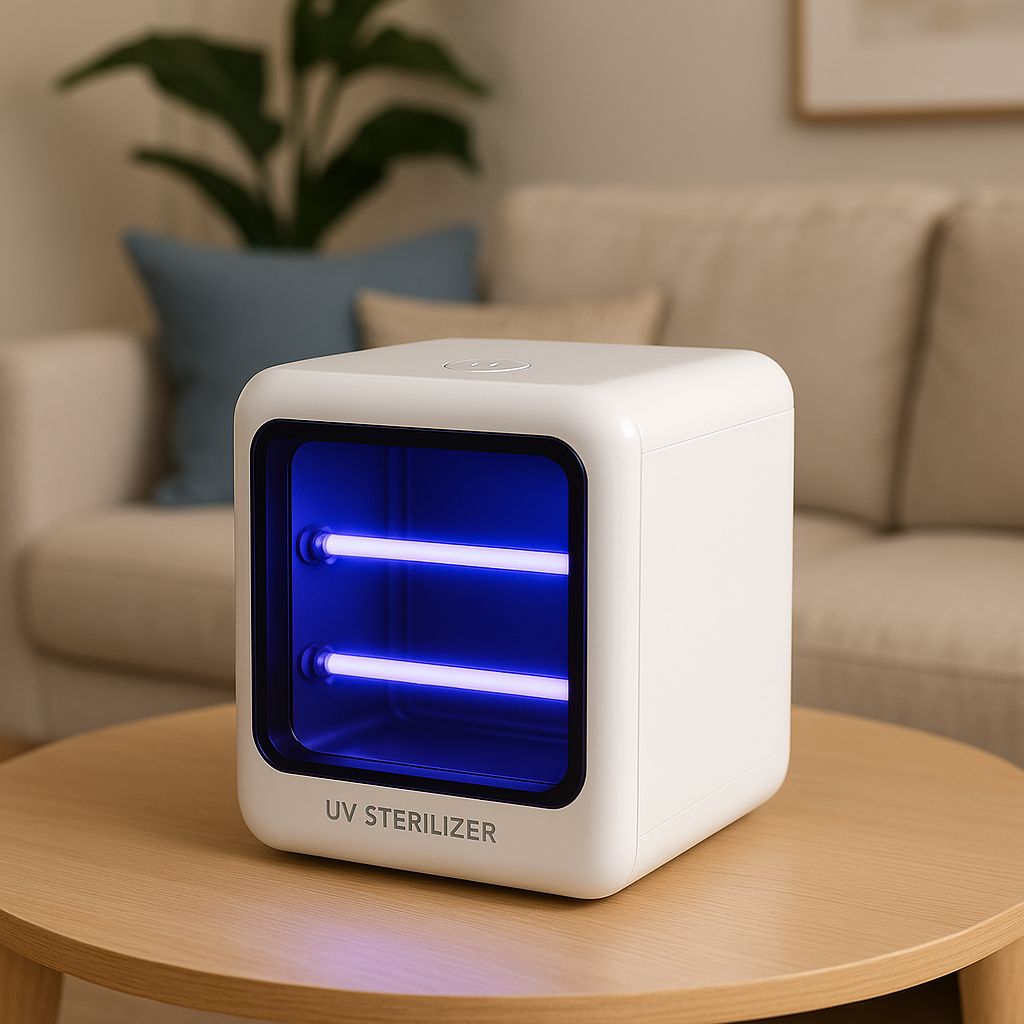
Looking to reduce chemicals and keep hands-off sterilizing simple at home? UV-C sterilizers use short-wavelength light to inactivate microbes on items and in enclosed air paths. Below you’ll find vetted, enclosed devices—boxes, toothbrush stations, and UV-assisted air purifiers—chosen for safety features (auto-off interlocks, enclosed chambers), realistic specs, and easy upkeep.
We prioritized models with clear wavelength disclosure (typically 260–280 nm LEDs or 254 nm bulbs), ozone-free operation, and reputable replacement parts. Specs were checked against maker pages and major retailers, and recurring owner feedback informed pros/cons. Availability and pricing change often—check product pages for the latest.
Below are five strong home picks with quick picks, a head-to-head table, detailed notes, and a buyer’s guide so you can add UV safely and sensibly to your cleaning routine.
Quick Picks
Top Pick
59S S2 UV-C LED Sterilizer Box
Ozone-free 260–280 nm LED chamber with fast cycles and 360° coverage. A versatile box for phones, keys, remotes, and small household items.
Runner-Up:
PhoneSoap 3 UV Phone Sanitizer
Trusted 254 nm UV-C chamber sized for phones, keys, earbuds. Simple 10-minute cycle and charging passthrough.
Best Value:
Pursonic Wall-Mounted UV Toothbrush Sanitizer
Family station for brush heads with automatic UV cycle and door-open auto-off. Keeps heads organized and off the counter.
Best for Baby/On-the-Go:
Munchkin Portable UV Sterilizer Plus
One-minute UV-C LED cycles for pacifiers and bottle nipples. Pocketable, rechargeable, and quick.
UV-Assisted Air:
GermGuardian AC4825
True-HEPA tower with enclosed UV-C lamp option. Filters particulates and exposes air to UV in a sealed path.
Head-to-Head Comparison
| Product | Type | Standout Feature | Pros | Cons | Deal Status* | Best For |
|---|---|---|---|---|---|---|
| 59S S2 Box | UV-C LED box | Fast, ozone-free LEDs | 360° coverage; quick cycles | Box size limits larger items | Coupons pop up | All-purpose small items |
| PhoneSoap 3 | UV-C bulb box | 254 nm bulbs + charging | Proven design; simple 1-button | Phone-sized; bulb replacement | Frequent promos | Phones, keys, earbuds |
| Pursonic Wall-Mount | Toothbrush station | Auto cycle + interlock | Neat storage; inexpensive | Small chamber; needs outlet | Value pricing common | Toothbrush heads & razors |
| Munchkin Portable | Portable UV-C LED | ~1-min cycles; pocketable | Fast; rechargeable | Tiny capacity | Occasional markdowns | Pacifiers, bottle nipples |
| GermGuardian AC4825 | HEPA + enclosed UV-C | Sealed UV path + HEPA | Common parts; simple upkeep | UV dwell depends on flow | Sales vary | Bedrooms & home offices |
Detailed Reviews
59S S2 UV-C LED Sterilizer Box
A fast, ozone-free UV-C LED chamber for everyday items. 360° interior coverage and short cycles make it practical for phones, keys, remotes, and grooming tools. Solid choice when you want an enclosed, chemical-free option.
- Best for: Catch-all household sanitizing in a compact box.
- Takeaway: Quick cycles and LED longevity with no ozone.
- Pros: Ozone-free; 360° coverage; simple.
- Cons: Limited to small/medium objects.
PhoneSoap 3 UV Phone Sanitizer
A long-running favorite for phones and EDC. Dual 254 nm bulbs, a clamshell design, and a single-button 10-minute cycle keep it foolproof. Fits most phones and small accessories; bulbs are user-replaceable.
- Best for: Nightstand or entry table—sanitize while you charge.
- Takeaway: Proven, compact—and easy to use daily.
- Pros: Passthrough charging; reliable brand.
- Cons: Phone-sized chamber limits versatility.
Pursonic Wall-Mounted UV Toothbrush Sanitizer
A wall-mount organizer that runs an automatic UV cycle when closed and shuts off when opened. Keeps brush heads tidy and off the counter, with simple daily operation.
- Best for: Families wanting less countertop clutter.
- Takeaway: Inexpensive, practical UV for a high-germ item.
- Pros: Auto-cycle; storage; easy install.
- Cons: Small chamber; needs nearby outlet.
Munchkin Portable UV Sterilizer Plus
A pocketable UV-C LED sterilizer that zaps pacifiers and bottle nipples in ~1 minute. USB-rechargeable and travel-ready; ideal for diaper bags and car kits.
- Best for: On-the-go sanitizing for baby items.
- Takeaway: Speed and portability made simple.
- Pros: Very fast; tiny; rechargeable.
- Cons: Only fits very small items.
GermGuardian AC4825 (HEPA + UV-C)
A popular 22-inch HEPA tower with an optional enclosed UV-C lamp that treats air as it passes the bulb. The HEPA filter captures particulates; UV-C adds an internal layer. Replacement filters and bulbs are inexpensive and easy to source.
- Best for: Bedrooms and home offices.
- Takeaway: Straightforward way to add UV to HEPA purification.
- Pros: Common parts; optional UV; simple upkeep.
- Cons: UV exposure depends on fan speed/flow.
Buyer’s Guide (Safer UV at Home)
- Choose enclosed designs: Favor boxes and sealed air paths with lid/door interlocks. Avoid open UV wands in occupied rooms.
- Wavelength & source: Look for 254 nm mercury bulbs or 260–280 nm UV-C LEDs. Avoid “ozone” modes for home use.
- Claims vs. reality: Efficacy varies with distance, time, and shadowing. Use UV as a complement to cleaning, not a replacement.
- Cycle time & coverage: Flat, line-of-sight exposure works best; flip items if your device doesn’t irradiate 360°. Air units rely on dwell time.
- Upkeep: Bulbs dim before they die; follow replacement intervals. Keep reflectors, quartz, and chambers clean for consistent performance.
Safety Note: Never stare at or expose skin to UV-C light. Use devices only as directed, keep away from children, and do not operate open-beam UV in occupied spaces.
FAQs
Do UV-C sterilizers replace cleaning?
No—UV is a complement. Wash visibly dirty items first; use UV for an extra disinfection step in an enclosed chamber or air path.
What wavelength should I look for?
Most consumer devices use either 254 nm bulbs or 260–280 nm LEDs. Both target microbial DNA/RNA; pick ozone-free, enclosed designs with safety interlocks.
Are UV wands safe?
Open-beam UV can injure eyes and skin within seconds. Unless professionally engineered and used in unoccupied spaces, skip wands and stick to enclosed designs for home use.
How often do bulbs need replacing?
Many lamp-based units suggest annual replacement with typical use. LEDs last longer but still gradually dim—follow maker guidance for cycle counts or years of service.